In the first part of 2025, Eurostat released updated data on green electricity production and renewable energy consumption in the European Union. The stats show how the EU is getting better at producing electricity from renewable sources and which countries are doing the best.
Production of ‘green’ electricity
In 2024, 46.9% of net electricity generated in the EU came from renewable energy sources.
Among EU countries, Denmark had the highest share of renewables in its net electricity generation with 88.4%, coming mostly from wind, followed by Portugal (87.5%, mostly wind and hydro) and Croatia (73.7%, mostly hydro).
The lowest shares of renewables were recorded in Luxembourg (5.1%), Malta (15.1%) and Czechia (15.9%).
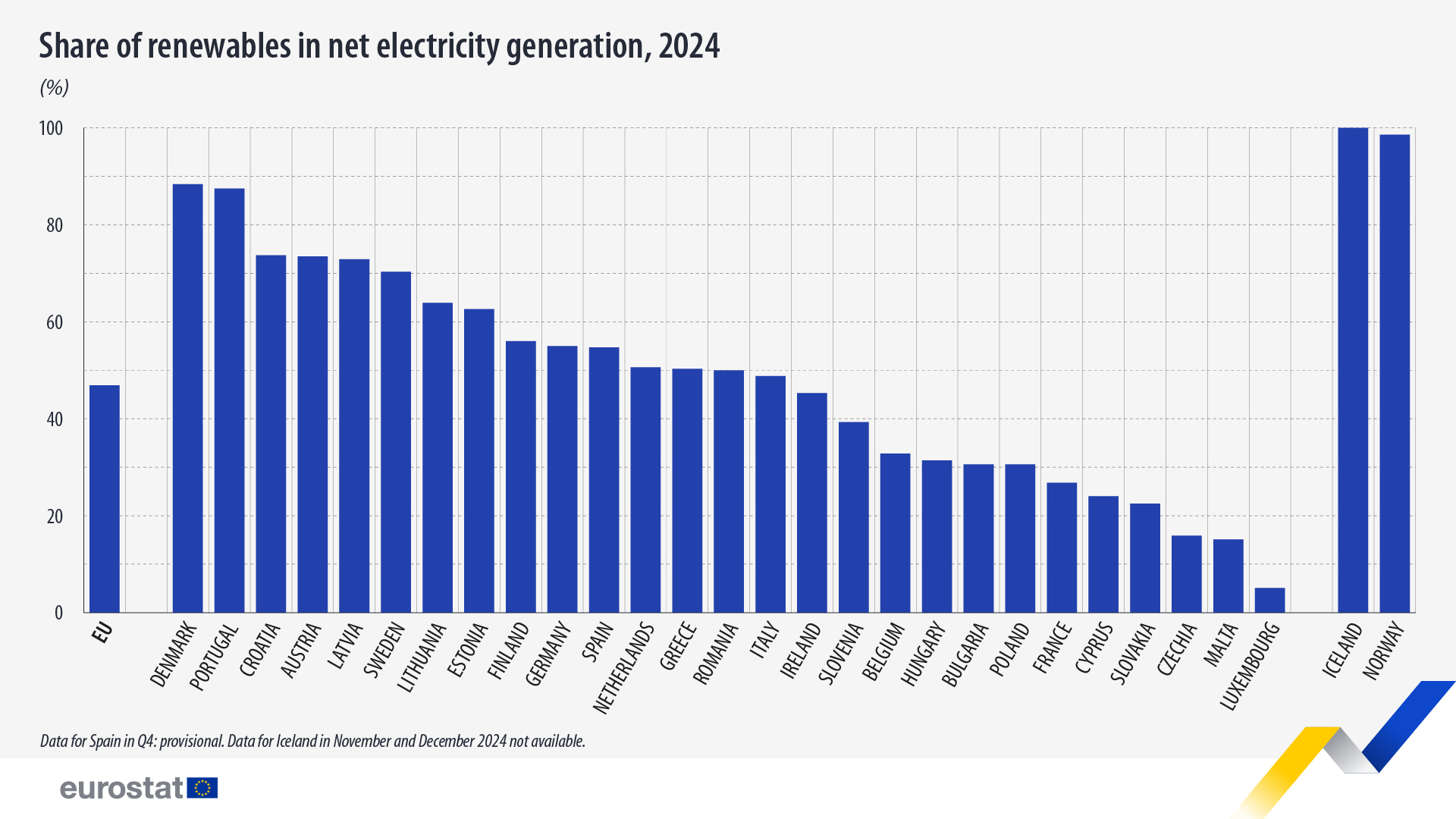
Source: Eurostat, citing nrg_cb_pem.
Wind and hydro power accounted for more than two-thirds of the total electricity generated from renewable sources (39.1% and 29.9% respectively). The remaining one-third of electricity came from solar (22.4%), combustible fuels (8.1%) and only around 0.5% from geothermal energy.
Renewable energy consumption
The sustainable development goal ‘affordable and clean energy’ (SDG 7) calls for universal access to affordable, reliable and sustainable energy. This includes improving energy efficiency, increasing the share of renewables and further diversifying the energy mix while ensuring energy affordability for all.
One of the Eurostat indicators to measure progress in SDG 7 is the share of renewable energy consumption in gross final energy consumption.
In 2023, 24.6% of the gross final energy consumed in the EU came from renewable sources, almost doubling in the last 15 years.
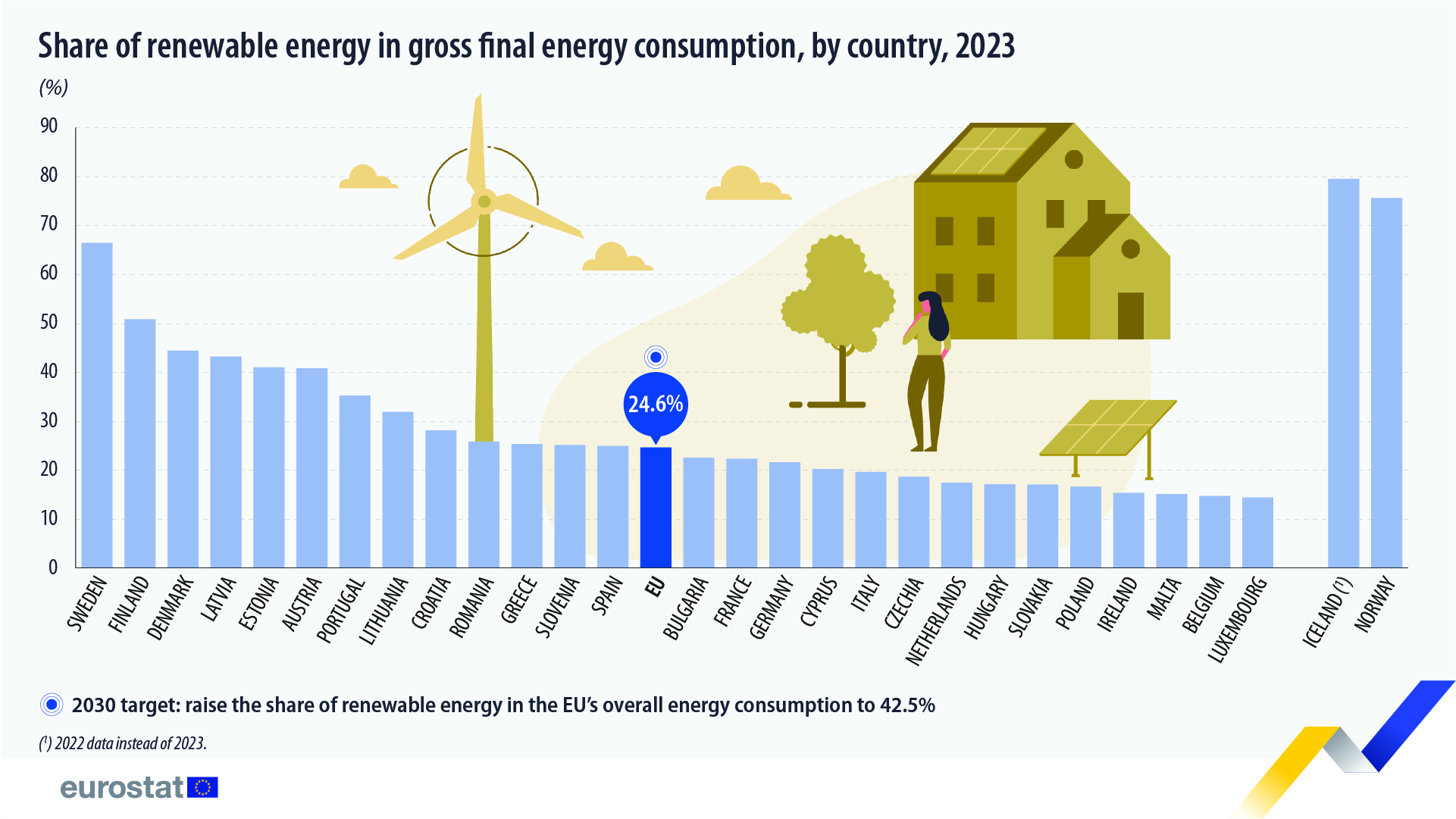
Source: Eurostat, citing sdg_07_40.
This growth was driven, among others, by reduced investment costs due to greater competition, more efficient technologies and renewable energy support schemes. Nevertheless, even faster growth will be needed to meet the 42.5% target in 2030.
Source: Eurostat